Sublimation, not dehydration

−41 °C · 0.0004 atm · 22 h

Every shortcut in instant noodles happens after the cooking: fry the noodle, powder the broth, rebuild it from parts. We do all the cooking first and then remove exactly one thing — the water.

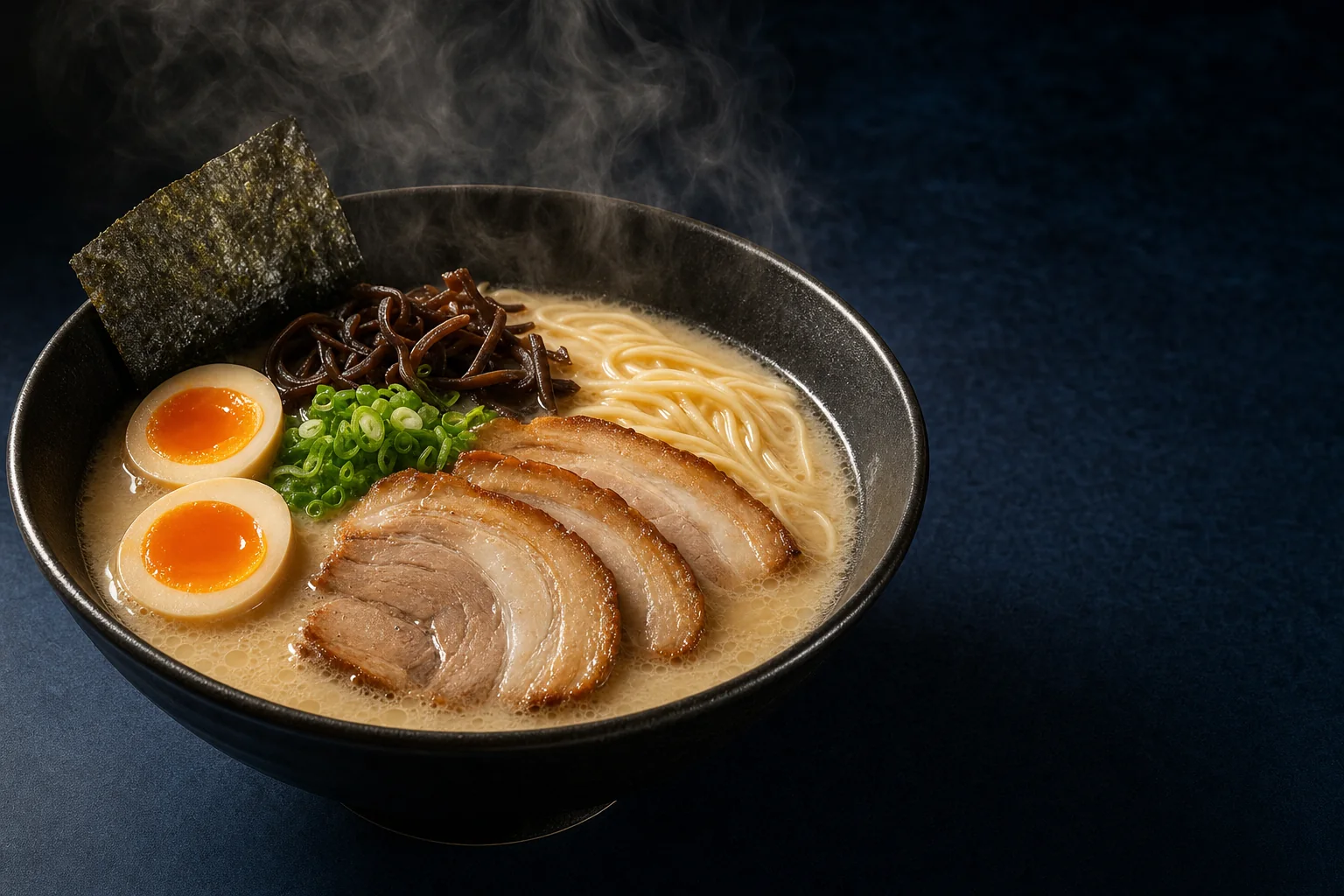
A stainless production kitchen line: bowls being assembled with chashu, egg and nori before the blast freezer.

Assembly line · four minutes to blast freeze

A ramen shop that stops time

Kenji ran a twelve-seat counter in Japantown and refused every offer to bottle his broth, because bottling meant pasteurizing and pasteurizing meant a different soup. Adaeze had spent nine years freeze-drying biological payloads for satellites, where the entire job is removing water without changing anything else.

She ate his tonkotsu in 2022 and asked one question: what if this never had to die? The answer took eleven months, four chamber redesigns, and thirty-one rejected production batches — and it is still just his bowl, paused.

Four stages

Every bowl, every cycle, logged

+100 °C

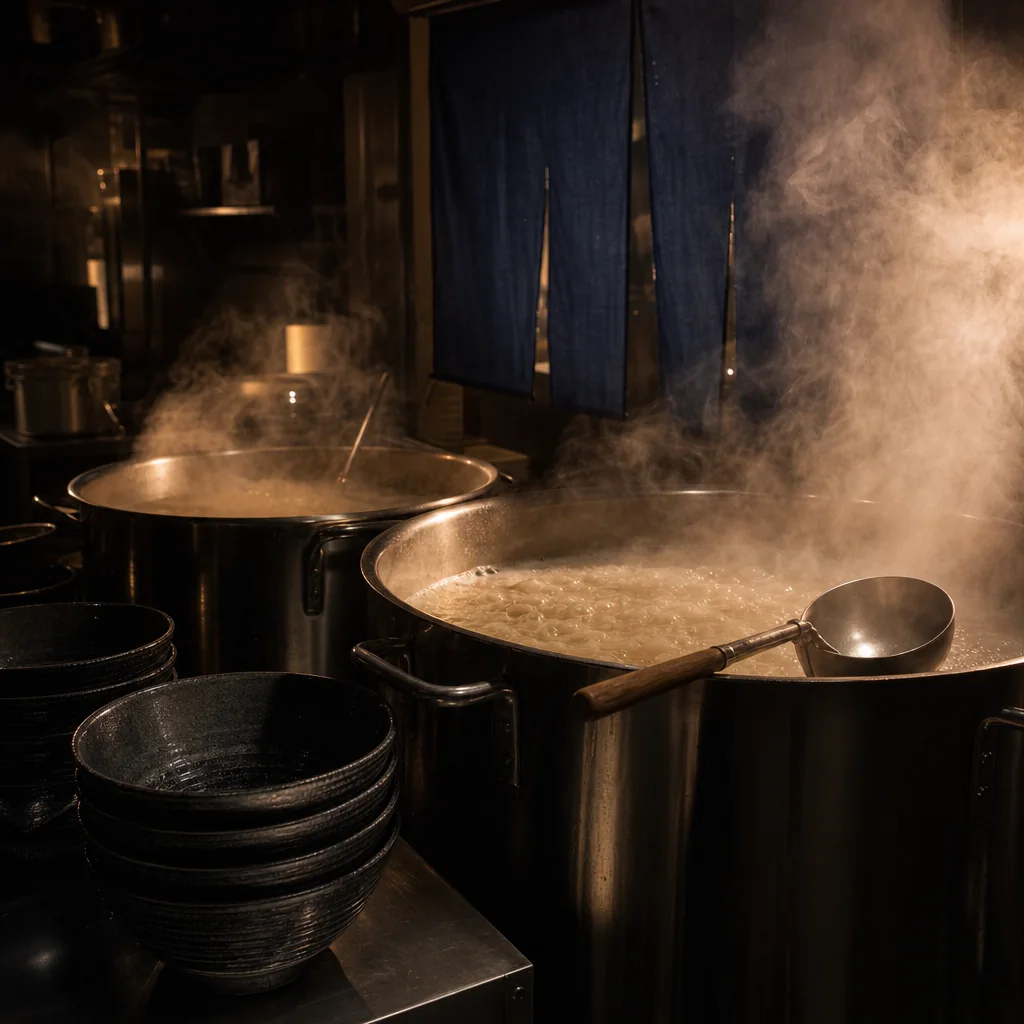
Cook the bowl. The whole bowl.

Broths run 10–22 hours depending on the bowl. Noodles are cut in-house at 28% hydration. Chashu holds at 63 °C for eight hours. Every bowl is assembled complete — broth, noodle, toppings, aroma oil — exactly as it would be served across the counter.
−41 °C

Freeze at −41 °C.

The assembled bowl goes into blast freeze within 4 minutes of assembly. At −41 °C, ice crystals stay small enough that cell walls in the toppings survive intact — this is why the mushrooms snap and the egg stays jammy on return.

0.0004 atm

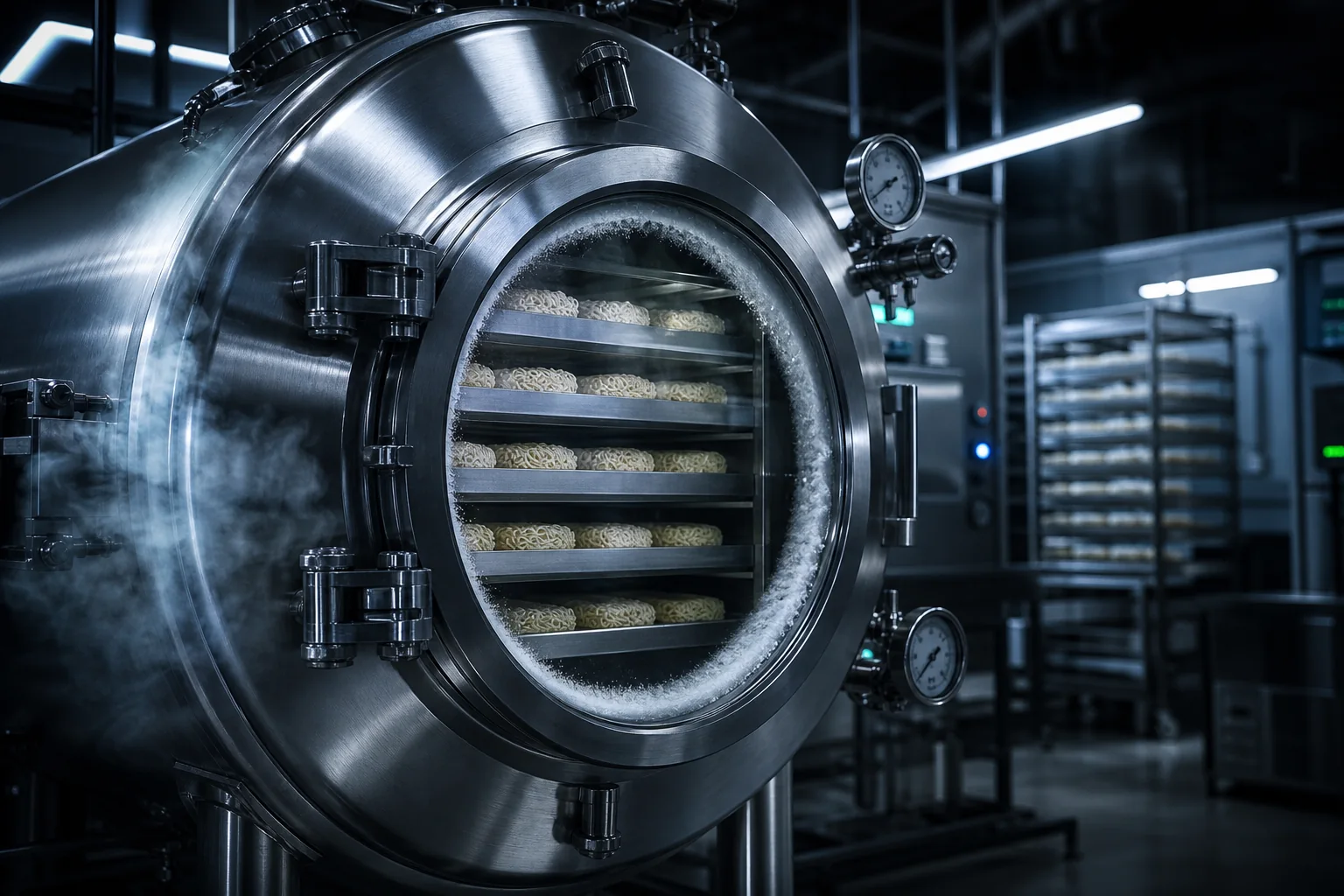
Sublimate. 22 hours, near-vacuum.

In the chamber, pressure drops to 0.0004 atmospheres. Ice skips the liquid phase entirely and leaves as vapor — sublimation — carrying away 98.6% of the water while every flavor compound, fat, and aromatic stays exactly where the cook put it.

+20 °C

Seal. Wait for water.

Each puck is sealed in a nitrogen-flushed pouch with an oxygen absorber, under 2% residual O₂. Shelf-stable for 24 months at room temperature. It is not dormant food; it is a finished bowl, paused mid-service.

Phase diagram: sublimation versus dehydrationPressure against temperature. Dehydration crosses the liquid region at high heat. The Kōridashi path runs below the triple point, straight from solid to vapor.SOLIDLIQUIDVAPORdeep-fry drying · through liquidkōridashi · 0.0004 atm · solid → vaporTEMP →PRESSURE ↑
Below the triple point, ice cannot melt — it can only leave as vapor. Everything else in the bowl stays exactly where the cook put it.

Below the triple point

Water has a pressure below which it cannot exist as a liquid at all. Drop the chamber under that line and ice has exactly one way out: straight to vapor, taking no dissolved flavor with it and leaving the structure it was frozen inside untouched.

That structure is why the noodle rebuilds instead of dissolving, why the kikurage still snaps, and why the yuzu oil in the shio bowl arrives as a top note rather than a memory.

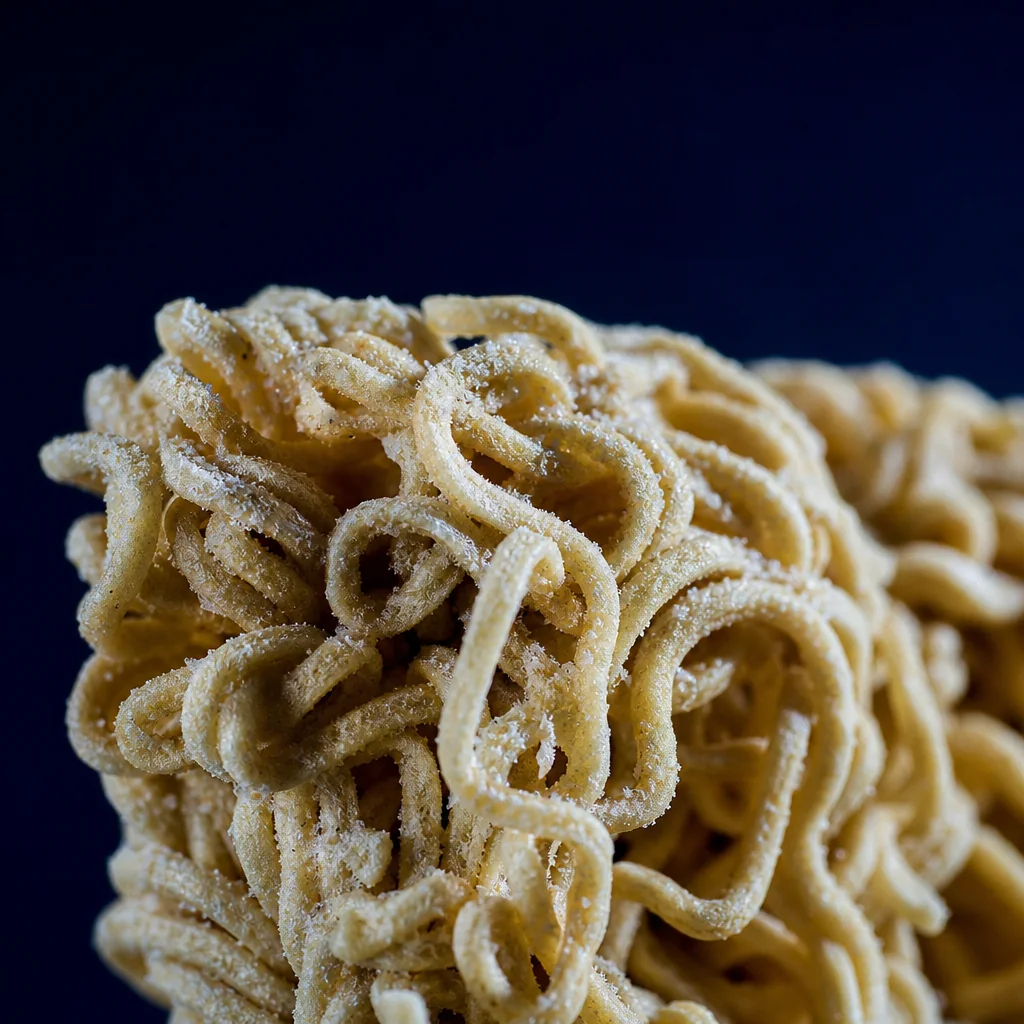
Macro detail of the dried noodle lattice with preserved scallion and mushroom held in open structure.

Cross-section · the lattice water leaves behind

What we buy, and from whom

Bones & birds
Whole pork femur and neck from Nestucca Valley Farms, Oregon; air-chilled chicken frames from a single-flock producer east of the Cascades. Delivered twice weekly, never frozen before the pot.
Noodles
Sheeted and cut in-house daily, #18 through #30 depending on the bowl. Hokkaido-milled flour, 28% hydration, kansui to spec. Rested 24 hours before assembly.
Konbu & niboshi
Rausu konbu and Setouchi niboshi, single importer, lot-traced. The dashi runs cold for twelve hours before it ever sees heat.
The chamber
A 1,200-tray lyophilizer built to Adaeze's spec in Georgetown, Seattle. It runs 22-hour cycles, six days a week, and is logged to the second.

Who built it

Two founders, one counter

Kenji Morimoto

Co-founder · Shokunin

Nineteen years behind ramen counters — Fukuoka, then Tokyo, then his own 12-seat shop in Seattle's Japantown. Kenji still tastes every production batch against a bowl cooked that morning, and has rejected 31 batches to date. His signature is on the inside of every lid.

Dr. Adaeze Nwosu

Co-founder · Process engineer

Formerly lyophilization lead on satellite biology payloads, where freeze-drying tolerances are measured in fractions of a percent. Adaeze walked into Kenji's shop in 2022, ate the tonkotsu, and asked one question: 'What if this never had to die?' The chamber is her design.

Taste the argument instead of reading it

Twenty-two hours of ours, ninety seconds of yours

Shop the lineup